
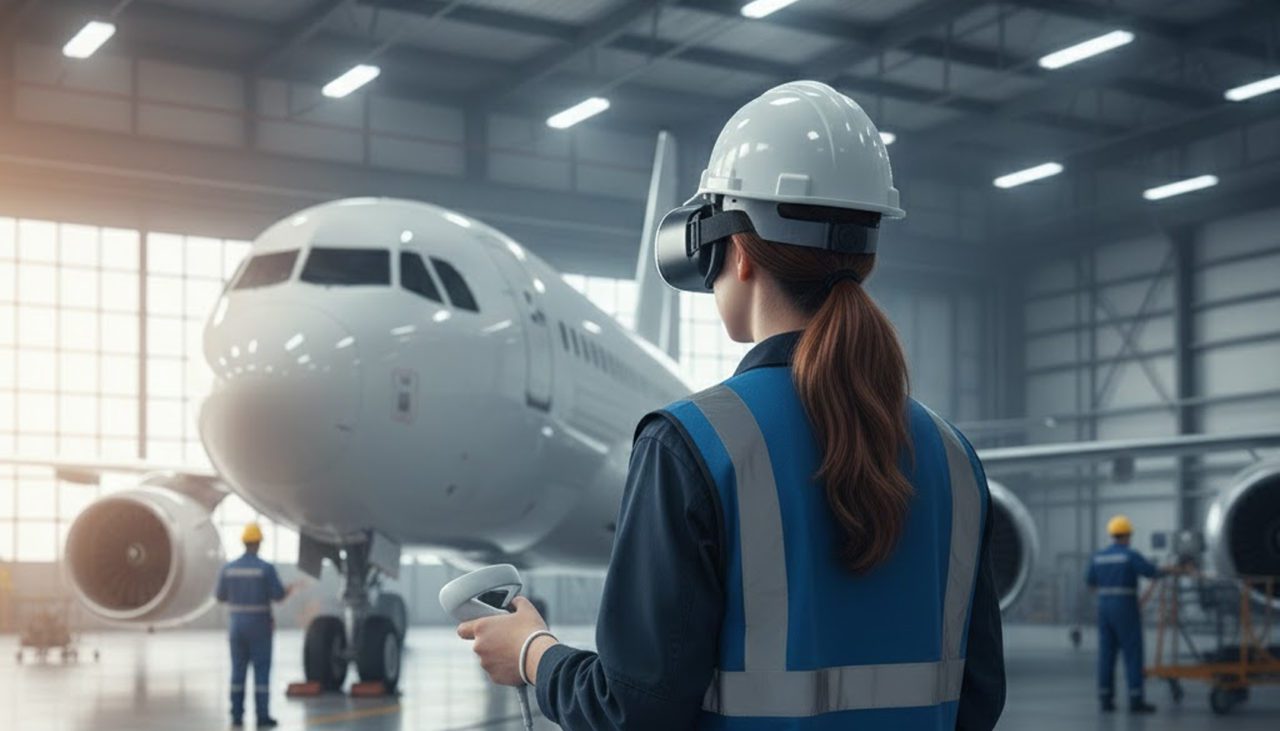
Step-by-Step Guide to Building a VR & XR Training Program That Scales
VR and XR training can transform the way organizations develop skills, improve safety, and accelerate onboarding. But building a program that scales isn’t just about buying headsets or software — it requires a structured approach, aligned with business goals and operational realities.
In this guide, we’ll walk through the key steps to create a VR and XR training program that works today and grows with your organization.
Key Takeaways
- Goal-first design: Align training with measurable business objectives.
- Technology fit: VR, AR, or MR should serve learning outcomes, not trends.
- Content is king: Modular and realistic content drives adoption.
- Pilot and iterate: Test early, refine often, and scale confidently.
- Data-driven: Analytics guide continuous improvement and demonstrate ROI.
How to Build a Scalable VR & XR Training Program: Overview
Building a VR and XR training program might feel overwhelming at first. There are technology choices, content considerations, deployment logistics, and performance tracking to manage. The key is to break the process into manageable, structured steps, each aligned with a clear purpose and measurable outcome.
Below is a high-level summary of the program-building process, which you’ll explore in detail in the steps that follow:
Some of the most common challenges include:
| Step | Action / Focus | Primary Benefit | Quick Tip / Highlight |
| 1 | Define business goals and training needs | Align program with real organizational priorities | Identify high-risk processes and performance gaps first |
| 2 | Choose technology (VR, AR, MR) | Ensure the right tools for desired learning outcomes | Let training objectives drive the technology choice |
| 3 | Develop or source content | Create realistic, modular, assessable training | Start with pilot modules to validate effectiveness |
| 4 | Select hardware and deployment strategy | Ensure smooth, scalable implementation | Plan for IT support, device lifecycle, and portability |
| 5 | Pilot, test, and iterate | Identify issues before full rollout | Collect feedback from representative learners |
| 6 | Integrate analytics & performance measurement | Track effectiveness & prove ROI | Use metrics like task completion, error reduction, and retention |
| 7 | Roll out at scale | Deploy efficiently across teams and locations | Communicate value, provide support, and continue iterating |
Step 1: Define Business Goals and Training Needs
Before selecting any technology, start with the why. Identify the operational challenges and learning objectives your immersive program should address. Ask questions like:
- What skills are critical for employee performance?
- Which processes carry high risk or cost if errors occur?
- Where are current training gaps or inefficiencies?
Clarity here ensures the program is aligned with measurable outcomes rather than trends or hype.
Organizations that link training to measurable KPIs
see up to 40% higher adoption and ROI. (Source)
Step 2: Choose the Right Technology (VR, AR, or MR)
Not all immersive experiences are the same. VR, AR, and MR each serve different purposes:
- VR (Virtual Reality): Fully immersive simulations for high-risk, hands-on practice.
- AR (Augmented Reality): Overlay instructions and guidance on real-world equipment.
- MR (Mixed Reality): Blend physical and digital objects for collaborative or spatial tasks.
Your choice should follow training goals, not hardware trends. Many organizations combine technologies to cover foundational and on-the-job skills.
Combining VR and AR can increase learning
retention and application by 30–50%. (Source)
Step 3: Develop or Source Content Strategically
Content is the heart of any VR and XR program. Decide whether to develop in-house, work with a vendor, or use a hybrid approach.
Key considerations:
- Align content with real-world procedures and compliance requirements.
- Break training into modular units for scalability and flexibility.
- Include assessment points to measure competency.
High-quality content drives engagement, ensures knowledge transfer, and supports long-term scalability.
Learners in VR programs complete tasks faster and
make fewer errors than in traditional methods.
Step 4: Select Hardware and Deployment Strategy
Choose devices that match your use case, budget, and user environment
- Standalone VR headsets: Portable, easy to deploy, minimal setup.
- PC-tethered VR: More powerful for complex simulations.
- AR/MR devices: Use in operational areas for real-time guidance.
Also plan for deployment at scale: number of devices, software distribution, IT support, and device lifecycle management.
Scaling device management properly reduces
program downtime and improves learner adoption.
Step 5: Pilot, Test, and Iterate
Before rolling out organization-wide, run a pilot program with a representative user group. Measure:
- Learner engagement
- Completion rates
- Skills improvement
- Feedback on content and usability
Use insights to refine the program, fix issues, and optimize workflows. Iteration ensures the program is effective when scaled.
Pilot testing increases deployment success and
reduces implementation risk.
Step 6: Integrate Analytics and Performance Measurement
Immersive training provides rich data. Track metrics like:
- Task completion times
- Error rates
- Proficiency gains
- Knowledge retention
Integrating analytics ensures training effectiveness, highlights improvement areas, and proves ROI to stakeholders.
Data-driven immersive programs allow continuous optimization,
improving results year over year.
Step 7: Roll Out at Scale
Once validated, deploy across teams and locations. Best practices:
- Use modular content to allow flexible training schedules.
- Provide IT and support infrastructure to avoid downtime.
- Communicate value to learners and managers to drive adoption.
- Continuously collect feedback for iterative improvements.
Scalability is not just about technology; it’s about creating a sustainable, repeatable training ecosystem.
Conclusion
Building a scalable VR and XR training program is no longer an experimental luxury; it’s a strategic imperative for organizations that want to stay competitive, reduce risk, and develop a future-ready workforce. By approaching the process step by step, defining goals, choosing the right technology, creating modular content, piloting, measuring results, and scaling thoughtfully, companies can unlock the full potential of immersive learning.
When done right, a VR and XR program doesn’t just train employees; it transforms how they learn, perform, and innovate. Teams gain confidence, critical skills are retained longer, and operational outcomes improve — all while reducing mistakes, downtime, and risk.
The organizations that succeed are those that treat immersive training as a long-term investment, continuously iterating, measuring impact, and integrating lessons learned. Start small, think strategically, and scale deliberately and your VR and XR program will become a cornerstone of workforce development, operational excellence, and competitive advantage.