

Top VR & XR Training Use Cases Across Industries
Across industries, training is becoming harder, not easier. Equipment is more complex, regulations are stricter, and experienced workers are retiring faster than they can be replaced. At the same time, organizations are under pressure to reduce incidents, improve productivity, and standardize processes across locations.
VR and XR training are increasingly adopted not because they are novel technologies, but because they solve these operational problems in a scalable way. Immersive training allows employees to practice real tasks in realistic environments, without disrupting operations or exposing people to risk.
This article explores where VR and XR deliver the strongest impact today, and why these use cases continue to expand across sectors
Key Takeaways
- Cross-industry impact: VR and XR training delivers value in both physical and people-centered roles.
- Risk-free practice: Employees can train for dangerous or rare scenarios safely.
- Faster readiness: Simulation shortens time to operational competence.
- Standardized delivery: Training quality remains consistent across sites and teams.
- Measurable performance: Data enables targeted improvement and accountability.
Why Immersive Training Works Across So Many Industries
Training challenges may differ from sector to sector, but many organizations face remarkably similar obstacles. Equipment is more complex, procedures are more regulated, and mistakes can be costly — both financially and in human terms. At the same time, teams are distributed, turnover is high, and consistent training is difficult to deliver across multiple locations.
Some of the most common challenges include:
- Limited access to equipment for training
- High cost of mistakes during learning
- Inconsistent instruction across sites
- Long onboarding times
- Lack of meaningful performance data
Immersive training solves these problems by shifting employees from passive observation to active participation. Learners can practice real tasks in safe, realistic simulations, receive immediate feedback, and repeat until proficiency is achieved. Training is standardized, scalable, and measurable — meaning organizations can deploy it globally without losing quality or control.
The real power of VR and XR comes from its versatility. Whether it’s preparing a maintenance technician for a rare equipment failure, training a warehouse worker on safety procedures, or rehearsing clinical scenarios in a hospital, immersive learning improves engagement, retention, and performance — while reducing risk.
To give an overview of how this translates across sectors, here’s a summary of the industries covered in this article and the key ways immersive training delivers value:
| Industry | Primary Training Focus | Key Benefit |
| Manufacturing and Industrial | Equipment operation, safety procedures | Fewer incidents, faster onboarding |
| Construction and Heavy Equipment | Heavy equipment, site safety | Reduced risk, better hazard awareness |
| Healthcare and Medical | Clinical procedures, emergency response | Improved patient safety, skill confidence |
| Logistics and Warehousing | Vehicle operation, workflows | Faster ramp-up, fewer accidents |
| Energy, Utilities, and Critical Infrastructure | Hazardous environments, shutdowns | Emergency readiness, regulatory compliance |
| Transportation and Aviation | Maintenance, safety protocols | Certification readiness, consistent performance |
| Education | Classroom management, lab experiments, remote learning | Safe hands-on practice, improved engagement |
| Military | Combat simulations, tactical exercises | Enhanced readiness, risk-free high-stakes training |
| Engineering | Design validation, machinery operation | Fewer design errors, safer prototyping |
| Pharmaceuticals | Lab procedures, compliance training | Reduced errors, regulatory adherence |
| Automotive | Vehicle assembly, repair, autonomous systems | Faster skills acquisition, improved quality |
| Telecommunications | Network deployment, troubleshooting | Reduced field errors, faster onboarding |
Manufacturing and Industrial
In manufacturing, even small errors can lead to safety incidents, production downtime, or quality defects. Yet many procedures are still taught through manuals, videos, or limited hands-on shadowing.
With VR training, workers can rehearse full production workflows, maintenance procedures, and safety protocols in realistic simulations before ever stepping onto the factory floor. XR solutions can also support real-world tasks by overlaying instructions during maintenance or inspections.
Typical use cases include machine operation, lockout/tagout procedures, equipment troubleshooting, and emergency response drills.
Companies using immersive training in industrial settings report faster onboarding, fewer incidents, and more consistent adherence to standard operating procedures across sites.
VR training improved safety awareness and risk perception by ~30% compared to traditional methods. (Source) |
Construction and Heavy Equipment
Construction environments are dynamic, unpredictable, and inherently risky. Traditional training methods offer limited opportunities for repeated practice, especially when heavy equipment and large crews are involved.
VR enables workers to train in complex site scenarios, practice equipment operation, and experience hazardous situations safely. This is particularly valuable for fall protection training, vehicle coordination, and site safety awareness.
Because scenarios can be updated to reflect different environments and regulations, immersive training also supports certification and compliance requirements more efficiently than classroom-only instruction.
The result is better situational awareness, stronger safety culture, and fewer costly accidents.
VR safety training in industry settings can reduce incident rates and help trainees better recognize hazards. (Source) |
Healthcare and Medical
Healthcare training is constrained by ethical considerations, patient availability, and limited access to advanced simulation facilities. At the same time, clinical errors carry serious consequences.
VR and XR enable clinicians to practice procedures, diagnostic workflows, and emergency responses repeatedly, without patient risk. Training can be tailored to specific hospital protocols, devices, and care pathways.
Use cases range from surgical preparation and emergency room simulations to patient communication and team coordination training.
Organizations adopting immersive medical training benefit from improved clinical confidence, better team performance, and more efficient use of physical simulation resources.
VR training leads to up to 80% knowledge retention, compared with much lower rates in traditional training. (Source) |
Logistics and Warehousing
Warehousing and logistics operations face high turnover, seasonal staffing peaks, and continuous pressure to improve efficiency. Training large numbers of new employees quickly and safely is a constant challenge.
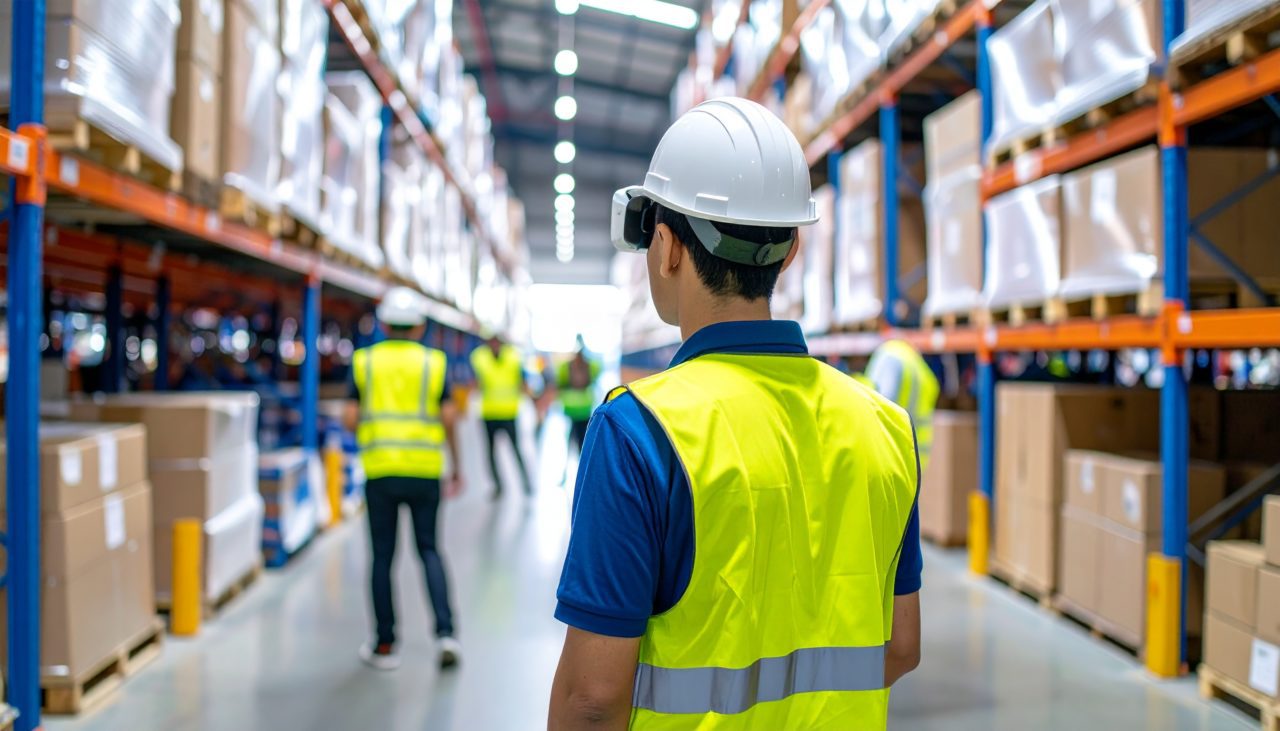
VR training allows new hires to learn picking routes, equipment operation, and safety procedures in realistic warehouse layouts before working in live environments. XR can then support workers with real-time guidance during complex tasks.
This approach shortens ramp-up time, reduces accidents, and improves process consistency, even when workforce composition changes frequently.
For fast-moving supply chains, immersive training becomes a tool for operational stability.
VR training can reduce onboarding time by as much as 60% according to workplace training statistics. (Source) |
Energy, Utilities, and Critical Infrastructure
In energy and utility sectors, many critical procedures are rarely performed, yet must be executed perfectly when needed. Training opportunities in real environments are limited due to safety and operational constraints.
VR allows teams to rehearse emergency shutdowns, hazardous environment protocols, and complex maintenance procedures under realistic conditions. XR can also support inspections and field operations by providing contextual information on site.
These technologies help ensure that personnel remain prepared for rare but high-impact events, improving resilience and regulatory compliance.
VR reduces safety hazards and simulated incident risk by up to ~43% vs traditional training. (Source) |
Transportation and Aviation
Transportation systems operate under strict safety and certification requirements. Access to real equipment for training is expensive and often limited.
VR simulations allow maintenance crews, ground staff, and operators to train on realistic systems without occupying operational assets. Scenarios can be repeated, varied, and assessed consistently across learners.
This leads to faster certification readiness, reduced training costs compared to physical simulators, and greater procedural consistency.
VR learners retain knowledge up to 75% vs ~20% with traditional learning methods. Source: VR training retention statistics. (Source) |
Education
Educational environments are increasingly complex, with a mix of classroom, lab, and remote learning. Teachers and trainers need to engage students while ensuring safety during hands-on activities. VR and XR training allow learners to practice experiments, technical skills, and collaborative exercises virtually, without risk to equipment or people. Scenarios can be repeated as often as needed, improving retention and confidence.
Immersive solutions also enable remote or hybrid learning, letting students experience realistic simulations wherever they are. Schools and universities using VR and XR report higher engagement, improved practical skill mastery, and safer learning environments.
Students trained with VR score ~30% higher in learning and socio‑emotional assessments. (Source) |
Military
Military training involves high-stakes, unpredictable scenarios that are often dangerous to replicate in real life. VR and XR allow personnel to rehearse combat operations, tactical exercises, and equipment handling safely in immersive simulations. Scenarios can be repeated under varying conditions, preparing teams for real-world operations without physical risk.
Defense organizations leveraging immersive training see improved operational readiness, faster decision-making under pressure, and a safer, controlled environment for high-risk skill development.
Immersive training simulations are a key part of modern military preparedness, enhancing tactical readiness without real‑world risk. |
Engineering
Engineering teams frequently work with complex machinery, prototypes, and designs where mistakes are costly or dangerous. VR and XR enables safe simulations of assembly, operation, and testing workflows before physical execution. Engineers can practice procedures, detect design errors early, and refine processes without risking equipment or personnel.
Companies adopting immersive engineering training report reduced errors, accelerated prototyping, and safer workflows for both trainees and real-world operations.
VR training enhances presence and learning efficacy in engineering assembly tasks compared to traditional methods. (Source) |
Pharmaceuticals
Pharmaceutical environments demand precision, strict compliance, and regulatory adherence. Immersive training allows technicians and scientists to rehearse lab procedures, hazardous material handling, and quality protocols safely. Scenarios are standardized, repeatable, and aligned with compliance requirements.
Organizations using VR and XR for pharmaceutical training see fewer procedural errors, improved regulatory adherence, and enhanced confidence among employees performing critical lab tasks.
VR training enhances presence and learning efficacy in engineering assembly tasks compared to traditional methods. (Source) |
Automotive
Automotive training requires precision in vehicle assembly, maintenance, and increasingly, advanced technologies such as electric or autonomous systems. VR and XR allows trainees to practice assembly lines, diagnostics, and repair procedures in virtual environments before touching real vehicles. Mistakes in simulation translate to learning, not costly rework.
Companies deploying immersive automotive training achieve faster onboarding, fewer production errors, improved quality, and better preparedness for complex technical tasks.
Over 60% of automotive manufacturers are deploying VR to train assembly line workers, improving onboarding time. |
Telecommunications
Telecommunications teams install and maintain network infrastructure in complex or hazardous environments. VR and XR training allows technicians to rehearse deployment, troubleshooting, and repair procedures virtually, reducing risk during live operations. Workers gain repeated practice in realistic scenarios without impacting service or safety.
Organizations implementing immersive telecom training see faster ramp-up for new hires, fewer on-site mistakes, and safer, more efficient network operations.
Immersive simulations reduce field errors and increase technician confidence before live deployments. (Source) |
Why VR and XR Deliver Consistent Val
Despite differences in workflows and risk profiles, successful immersive training programs share common outcomes:
- Employees practice instead of passively observing
- Errors become learning opportunities rather than incidents
- Training quality remains consistent across locations
- Performance data supports continuous improvement
These advantages explain why immersive training is increasingly seen as an operational tool, not just an L&D innovation.
Conclusion
VR and XR training are no longer limited to pilot programs or niche applications. Across industries, immersive learning is becoming a core component of workforce development strategies.
From factory floors to hospitals to corporate offices, organizations are using simulation-based training to reduce risk, improve performance, and adapt faster to changing operational demands.
As business environments continue to grow more complex, immersive training provides a scalable foundation for building resilient, future-ready teams.