
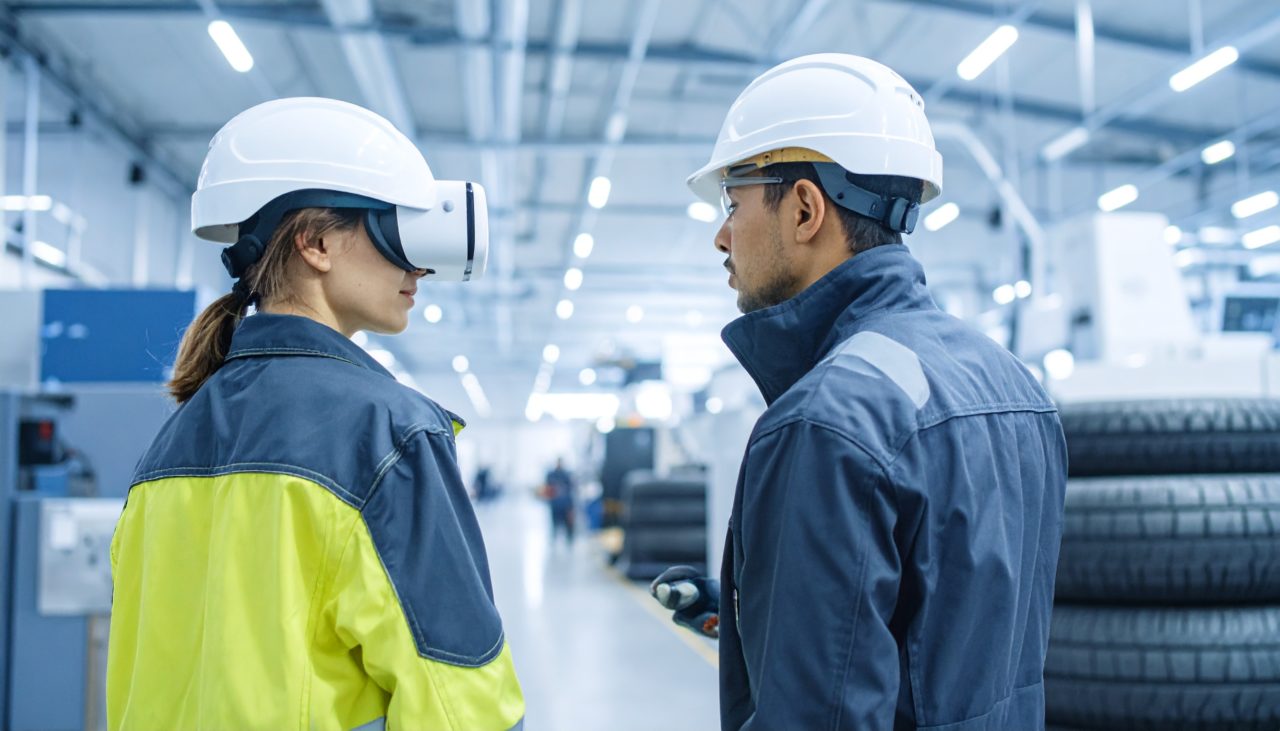
VR vs XR vs AR vs MR for Corporate Training
Immersive technologies — VR, XR, AR, and MR — are reshaping how organizations train their workforce. Yet, many learning leaders struggle to understand which technology fits which training challenge, when each delivers the strongest ROI, and how to evaluate them strategically rather than as buzzwords.
In this article, we break down each immersive technology, compare their real-world training applications, and help you determine the right choice for your corporate training strategy.
Key Takeaways
- Different tools: VR, AR, and MR serve distinct training needs and outcomes.
- Risk level matters: Use VR for hazardous scenarios, AR/MR for real-world support.
- Learning impact: Immersive formats improve retention through hands-on practice.
- Business alignment: Technology choice should follow operational goals, not trends.
- Hybrid strategies: Combining VR and AR often delivers the strongest results.
What These Terms Really Mean (and Why It Matters)
To choose the right immersive tech you must start with clarity
| Technology | Meaning | Core Experience | Typical Devices |
| VR (Virtual Reality) | Fully immersive simulated environment | User is inside a digital world | VR headsets (Quest, Pico, Vive) |
| AR (Augmented Reality) | Digital overlay on real world | Mixes digital elements with real environment | Fully interactive, multi-sensory, and scenario-based |
| MR (Mixed Reality) | Interactive digital + physical combination | Digital objects anchored to real space | HoloLens, Magic Leap |
| XR (Extended Reality) | Umbrella term for VR/AR/MR | Any immersive combination | Fully interactive, multi-sensory, and scenario-based |
XR isn’t a technology itself — it’s a category that encompasses VR, AR, and MR. But in enterprise language, “XR solutions” often implies tailored, training-ready immersive systems.
Core Differences in One Glance
Before we dig deeper, here’s a quick snapshot of how these technologies compare on key training dimensions:
| Dimension | VR | AR | MR |
| Immersion | ★★★★ | ★★ | ★★★ |
| Interaction | High | Medium | High |
| Real-World Integration | Low | Medium | High |
| Hardware Complexity | Medium | Low | High |
Best for Safety/Critical Simulations | ★★★★ | ★ | ★★ |
Virtual Reality (VR): The Immersive Training Powerhouse
What VR Does
Virtual Reality replaces the user’s environment with a fully simulated, 3D world. Trainees can interact with lifelike scenarios without physical risk.
Best Uses in Corporate Training
✔ High-risk procedural training
✔ Emergency response simulations
✔ Soft-skills scenarios (customer service, leadership)
✔ Machine operation and assembly
✔ Remote skills practice
Why VR Works So Well
- Total focus: Removes real-world distractions
- Safe failure: Mistakes don’t have real consequences
- Muscle memory: Repeatable practice builds skill faster
- Consistent delivery: Every learner gets the same experience
Augmented Reality (AR): Overlaying Training in the Real World
What AR Does
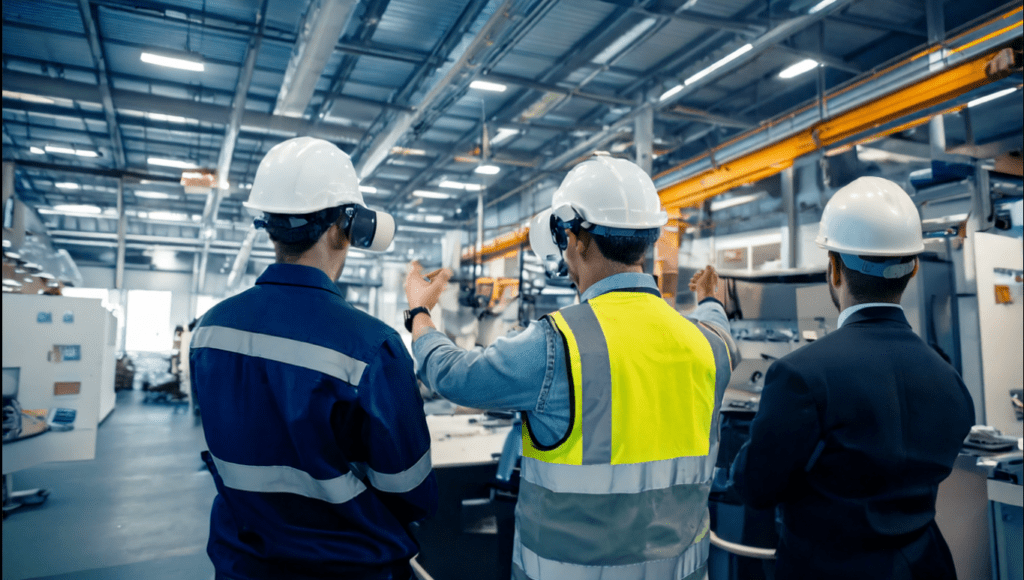
Augmented Reality projects digital information onto the real world. Think of digital arrows, labels, instructions, and checkpoints visible through glasses or phone screens.
Best Uses in Corporate Training
✔ On-the-job assistance
✔ Step-by-step work instructions
✔ Visualizing hidden systems (wiring, piping)
✔ Remote expert support
Why AR Works for Training
- Contextual learning: Info is right where it’s needed
- Hands-free guidance: Ideal for field teams
- Faster error recognition: Visual cues reduce mistakes
Mixed Reality (MR): The Hybrid Experience
What Makes MR Unique
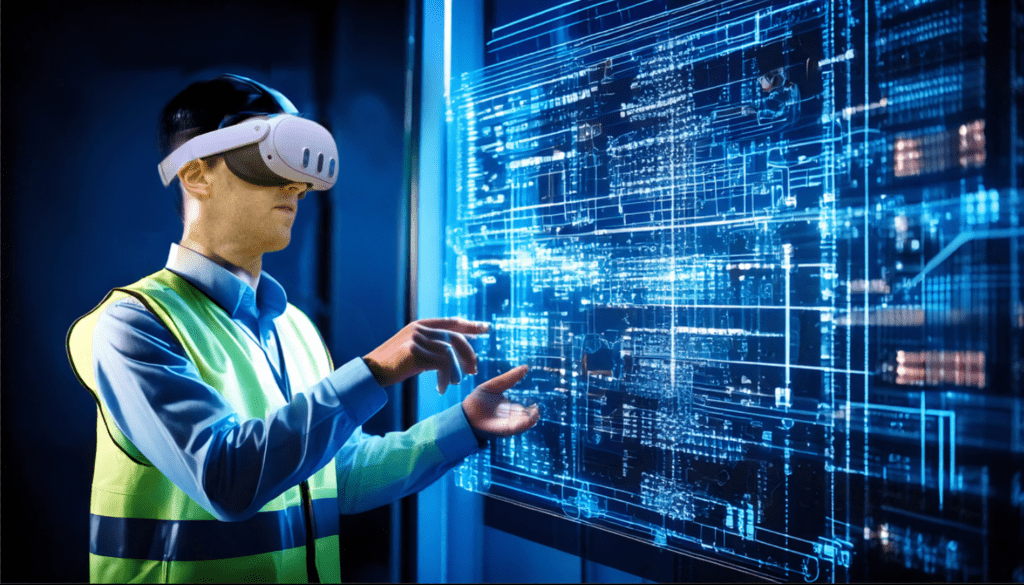
Mixed Reality blends real and virtual worlds with interaction — digital objects aren’t just overlaid; they’re anchored to real spaces and respond to gestures and gaze.
Best Uses in Corporate Training
✔ Complex spatial training
✔ Scenarios requiring digital object manipulation + real environment
✔ Collaborative planning and simulation
Why MR Matters
MR combines the safety and adaptability of VR with the contextual awareness of AR. It’s excellent where trainees need to understand digital systems in the physical world.
Choosing the Right Technology for Your Training Goal
Step 1: Clarify the Training Challenge
Ask:
- Is the goal risk reduction?
- Do learners need hands-on practice?
- Is real-world context important?
If you need realistic procedural rehearsal → VR.
If you need support during actual work → AR.
If you need digital-physical interaction → MR.
Step 2: Map Technology to Learning Outcomes
Here’s a simple decision guide:
| Training Outcome | Best Technology |
| Safety & emergency response | VR |
| Field task guidance | AR |
| Complex spatial assembly | MR |
| Anytime scalable remote training | VR / XR |
| Real-world performance support | AR / MR |
3 Most Common Misconceptions (and the Truth)
| ❌ Misconception #1 | “AR is just for fun — not serious training.” | Reality: AR is highly effective for contextual, procedural support on the job — especially for front-line workers. |
| ❌ Misconception #2 | “VR is too expensive.” | Reality: Costs have dropped dramatically. And when you compare reduced accidents, faster onboarding, and improved retention, VR often delivers a superior ROI. |
| ❌ Misconception #3 | “MR is just VR + AR.” | Reality: MR isn’t a simple mash-up — it’s about contextual interaction in space, which can drive uniquely powerful learning outcomes. |
How to Evaluate Immersive Training Platforms
Here are practical criteria to benchmark technology vendors:
| 1. Learning Objectives Alignment | Does the platform match what you want employees to do after training? |
| 2. Assessment & Analytics | Are performance metrics tracked automatically? |
| 3. Hardware Flexibility | Can it run on multiple devices (enterprise VR headsets, AR glasses, mobile)? |
| 4. Ease of Updates | Can you change content without full redeployment? |
| 5. Scalability & Support | Does the vendor support rollout across sites, languages, and roles? |
3 Most Common Misconceptions (and the Truth)
| Aspect | VR Solution | AR Solution |
| Use Case | Forklift safety training | On-the-job inspection assist |
| Key Benefit | Reduced accident rates | Fewer on-site errors |
| Delivery | Fully simulated scenarios | Real environment with digital overlays |
| Learning Outcome | Behavioral change over time | Real-time error prevention |
When to Combine Technologies
In many modern enterprise programs, hybrid strategies work best.
✔ Use VR for immersive procedural training
✔ Use AR for on-the-job guidance and prompts
✔ Use MR for collaborative planning and complex spatial tasks
This combination builds:
- Strong foundational skills
- Real-world performance support
- Measurable operational impact
Final Recommendation: Strategy Over Buzzwords
Choosing the right immersive tech isn’t about labels — it’s about performance outcomes.
Here’s a simple rule of thumb:
→ Choose VR when your priority is deep, immersive learning with zero real-world risk.
→ Choose AR when your priority is real-time on-the-job support.
→ Choose MR when your priority is interactive spatial learning in context.
→ Use XR to capture the full suite of immersive solutions.
Your training strategy should start with business goals, not technology categories.
Conclusion
Immersive technologies offer a new frontier for workforce training. Whether you’re trying to reduce accidents, improve compliance, accelerate onboarding, or support field teams — the right technology will multiply impact while controlling costs.
If you’re ready to evaluate immersive training solutions for your organization, let’s talk about tailoring VR, AR, or MR to your specific use case and measurable outcomes.