
The Future of Corporate Training: How VR and XR Are Reshaping Workforce Learning
Traditional employee training—think static user manuals, slide decks, classroom lectures, and one-off workshops—has long been the backbone of workforce development. While these methods can convey information, they often fail to engage employees, simulate real-world complexity, or provide the hands-on experience required for high-stakes roles.
Virtual Reality (VR) and Extended Reality (XR) are changing all of that. By immersing employees in interactive, lifelike simulations, these technologies allow teams to practice, fail safely, and master complex tasks before applying skills in the real world. From manufacturing floors to healthcare settings, from logistics to education, VR and XR training is becoming the definitive future of corporate learning—a shift from passive instruction to active, experience-driven development that boosts performance, safety, and retention.
Key Takeaways
- Active learning: VR/XR boosts engagement and retention.
- Safe practice: Teams rehearse high-risk tasks without real-world consequences.
- Scalable: Deployable globally with consistent quality.
- Data-driven: Performance insights enable continuous improvement.
- Strategic advantage: Builds safer, more capable, future-ready teams.
Defining VR and XR: The Foundations of Modern Workforce Training
What is VR?
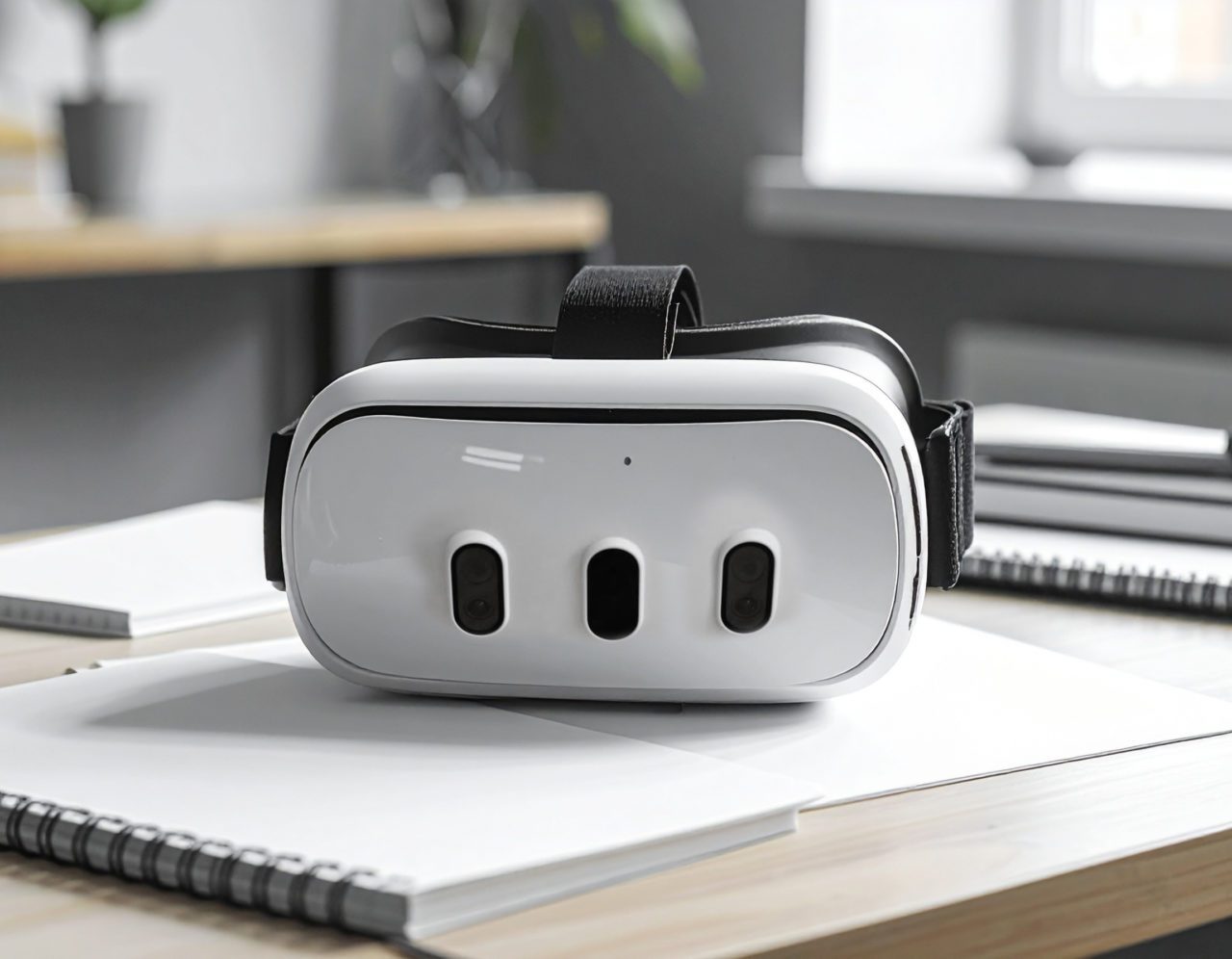
Virtual Reality (VR) creates fully immersive digital environments where users wear headsets and controllers, shutting out the physical world to interact with realistic, computer-generated simulations. VR allows individuals and teams to practice complex tasks, explore environments, and train on equipment or processes in a safe, controlled, and repeatable way.
Key characteristics of VR training solutions:
- Fully synthetic 3D environment
- High sense of “presence”—the brain reacts as though it is really there
- Ideal for high-risk, high-complexity scenarios where mistakes are costly
- Supports repetition without real-world consequences, accelerating mastery
Why it matters for organisations:
VR is especially valuable for roles where safety, precision, or costly equipment make real-world practice impractical. By simulating realistic scenarios, companies can reduce errors, speed up onboarding, and improve confidence before employees operate in real environments.
What is XR?
Extended Reality (XR) is the umbrella term that covers VR, Augmented Reality (AR), and Mixed Reality (MR). XR blends physical and digital elements—for example, virtual overlays on real-world equipment or digital twins interacting with real objects.
Key characteristics of XR training solutions:
- Seamless blending of real and virtual worlds
- Ability to augment physical workflows with digital data (equipment sensors, visual overlays, instructions)
- Supports situational training without full immersion, ideal for real-world environments
Why it matters for organisations:
XR allows teams to train in actual work environments while benefiting from digital guidance and analytics. For example, a maintenance technician can receive step-by-step XR overlays on a machine, reducing mistakes and speeding up proficiency. XR bridges the gap between theory and practice, making it ideal for on-the-job training in complex operational settings.
Why Organisations Are Embracing Immersive Training
As industries become more complex, fast-paced, and competitive, traditional employee training struggles to keep up. Static manuals, classroom lectures, and one-off workshops can deliver information, but they rarely provide the confidence, engagement, or hands-on experience employees need to perform safely and efficiently.
VR and XR training address these gaps by creating immersive, repeatable, and measurable learning experiences. They enable employees to practice high-stakes tasks in a risk-free environment, accelerate skill acquisition, and generate actionable insights for management.
Key drivers for adoption:
- Distributed, global workforces: Teams are often spread across multiple locations, making standardised, high-quality training a challenge. Immersive platforms deliver consistent experiences anywhere in the world.
- Complex operations and equipment: Modern machinery and workflows demand precision and situational awareness. VR/XR simulations allow employees to rehearse tasks repeatedly until proficiency is achieved.
- Low tolerance for mistakes: Errors can result in safety incidents, regulatory penalties, or financial loss. Simulations let staff learn by doing without real-world consequences.
Talent engagement and retention: Employees increasingly expect interactive, technology-driven learning. Immersive training boosts motivation, retention, and skill mastery compared with passive instruction.
Measurable Benefits of VR/XR Training
| Metric | Traditional Training | Immersive VR/XR Training |
| Engagement | Passive, one-way instruction | Fully interactive, multi-sensory, and scenario-based |
| Knowledge Retention | Low; learners forget 70–80% within a week | Up to 4x higher due to experiential learning |
| Safety Risk | Real-world exposure to hazards | Mistakes are contained in a safe virtual environment |
| Time-to-Proficiency | Weeks to months | Onboarding accelerated by 30–50% |
| Scalability | Limited by instructors, location, or equipment | Deployable globally with consistent quality |
| Performance Analytics | Minimal; based on observation or tests | Rich data on decisions, errors, reaction time, and progress |
| Cost Efficiency | High travel, equipment, and instructor costs | Lower over time; reusable modules reduce ongoing expenses |
Why It Delivers Strategic Value
Immersive training goes beyond improving skills—it multiplies organisational performance:
- Reduced operational errors: Employees can rehearse high-risk procedures multiple times, leading to fewer real-world mistakes.
- Faster onboarding and upskilling: Teams reach competency faster, improving productivity.
- Enhanced compliance and safety: Employees internalise procedures without exposure to hazards, reducing incidents and regulatory risk.
- Actionable insights: Analytics track performance trends, identify gaps, and inform ongoing training optimisation.
Emerging Trends Driving ROI
Understanding the latest trends in immersive training is key to unlocking measurable business impact and maximising the return on investment.
- AI-driven adaptive learning: VR/XR platforms can adjust difficulty or scenario complexity in real-time, tailoring experiences to individual learners.
- Collaborative virtual training: Distributed teams can train together in shared VR/XR environments, improving communication and coordination.
- Integration with operational workflows: XR overlays can guide staff on live equipment or processes, bridging the gap between simulation and reality.
- Continuous improvement loop: Data from simulations informs curriculum updates, creating a self-optimising learning ecosystem.
Broad Industry Applications – Beyond the Usual Suspects
Immersive VR and XR training is no longer limited to a few sectors. Organisations across diverse industries are adopting these technologies to improve safety, efficiency, and skill mastery. By simulating real-world scenarios, immersive training allows employees to learn faster, practice safely, and gain confidence before handling critical tasks in the field.
The following table summarises how VR/XR training applies across multiple industries and the tangible benefits it delivers:
| Industry | Typical Applications | Key Benefits |
| Manufacturing | Machine operation, assembly lines, maintenance procedures | Reduced errors, faster onboarding, improved safety compliance |
| Healthcare | Surgical simulations, emergency response, patient care | Risk-free practice, improved procedural accuracy, enhanced patient safety |
| Automotive & Transportation | Vehicle assembly, diagnostics, maintenance, flight operations | Shorter prototyping cycles, faster technician training, improved operational precision |
| Energy & Utilities | Power plant operations, equipment handling, safety drills | Reduced downtime, safer training for hazardous environments, enhanced compliance |
| Construction | Site safety, equipment handling, scaffolding, heavy machinery | Fewer on-site accidents, accelerated skills development, standardised safety training |
| Logistics & Warehousing | Process optimisation, equipment operation, inventory management | Improved efficiency, reduced operational errors, scalable training for distributed teams |
| Telecommunications | Network installation, infrastructure maintenance | Reduced setup errors, faster technical proficiency, remote team training |
| Education & Research | Engineering labs, medical simulations, interactive STEM learning | Enhanced engagement, experiential learning, improved knowledge retention |
| Defense & Security | Tactical training, mission rehearsal, equipment handling | Safe simulation of high-risk scenarios, faster decision-making, coordinated team training |
| Service & Sales | Customer interactions, conflict resolution, sales scenarios | Interactive role-play, improved customer engagement, better soft skills development |
How to Get Started – Practical Steps and Tips
Implementing immersive training can feel complex, but a structured approach ensures fast, measurable results. The following table outlines the key steps, actions, and expert tips for a successful rollout:
| Step | Action | Practical Tips |
| 1. Identify Training Needs | Analyse skills gaps, operational risks, and high-value tasks that benefit most from immersive learning | Focus on high-risk or high-cost scenarios first to maximise ROI |
| 2. Choose the Right Technology | Decide between VR, XR, or a hybrid solution depending on whether full immersion or real-world augmentation is needed | Consider the complexity of tasks, equipment availability, and learning environment |
| 3. Develop or Acquire Content | Build customised modules or select off-the-shelf simulations tailored to your industry and workflow | Custom content delivers higher engagement; off-the-shelf modules are faster to deploy for general skills |
| 4. Pilot and Test | Run a small-scale pilot with a select group of employees to validate usability, content, and hardware | Gather feedback and performance metrics to refine the program before full rollout |
| 5. Deploy at Scale | Roll out across teams and geographies, integrating with LMS or existing learning systems | Standardise deployment and training schedules to ensure consistency |
| 6. Measure Performance | Track completion rates, skill improvement, error reduction, and employee feedback | Use analytics dashboards to monitor progress and identify skill gaps |
| 7. Iterate and Optimise | Continuously update modules, scenarios, and difficulty based on data and operational changes | Treat immersive training as a dynamic platform, not a one-off project |
| Expert Tip: Start with high-impact, high-risk scenariosFocus your immersive training rollout on tasks where errors are costly, safety is critical, or operational efficiency has the greatest impact. By tackling these areas first, you demonstrate measurable ROI quickly, build organisational confidence in VR/XR training, and create momentum for broader adoption. |
Deep Insight – The Data-Driven Future of Immersive Training
The next frontier of workforce development is immersive, intelligent, and continuously evolving. VR and XR are no longer just training tools—they’re performance engines.
In the near future:
- Learning adapts in real time: AI adjusts scenarios to each employee, turning mistakes into instant feedback and mastery.
- Teams train together anywhere: Distributed workforces collaborate in shared virtual environments, building coordination before they ever set foot on the job.
- Reality and simulation merge: XR overlays guide employees on actual equipment, ensuring skills transfer seamlessly from virtual to real-world tasks.
- Data drives everything: Every session generates insights—errors, reaction times, decision patterns—informing smarter training and operational planning.
Immersive training is no longer optional; it’s a strategic advantage. Companies that embrace it today are shaping a workforce that learns faster, performs safer, and adapts to tomorrow’s challenges before they arrive.
FAQs – Frequently Asked Questions
Q: How much does VR/XR training cost compared with traditional training?
A: Costs vary widely depending on hardware, custom content and scale. However, when you account for travel, equipment downtime, instructor fees and risk exposure, immersive solutions often show payback in 12–24 months for high-stakes operations. The long-term reuse potential is a major cost advantage.
Q: What hardware is required?
A: For VR: headset (standalone or tethered), controllers, tracking system. For XR: may require AR glasses, sensors, overlay systems, real-world equipment. Ensure latency and motion tracking meet training standards—poor hardware undermines effectiveness.
Q: How do you measure success of an immersive training program?
A: By tracking both learning metrics (completion rate, retention, error reduction) and business metrics (downtime reduced, safety incident reduction, onboarding time shortened). Use a baseline established before the immersive rollout.
Q: Are there risks or limitations with VR/XR training?
A: Yes. Some issues to watch: motion sickness / user discomfort; over-reliance on simulation (missing real-world nuance); technology obsolescence; lack of standardisation in XR systems.
Q: How long does it take to implement a full immersive training solution?
A: It depends. A pilot can be done in a few weeks; full deployment (including global rollout, hardware procurement, integration) may take several months. It’s crucial to include time for content refinement and user acceptance testing.
Q: Which industries see the fastest adoption of immersive training?
A: Sectors with high complexity, high risk, regulatory intensity or global operations: manufacturing, healthcare, energy/utilities, logistics, aviation, defence. But immersive training is increasingly viable for sales, service, telecom and education too.
Conclusion
Immersive training is not a gimmick. It’s becoming a core pillar of how forward-looking organisations train, maintain and scale their workforce. Whether you’re onboarding new hires, managing high-risk operations, or training technicians on next-gen systems, the opportunity is real and measurable.
For companies that lean in now, the advantage lies not only in improved skills and performance—but in building a training architecture capable of evolving with future technologies.
If you’re ready to explore how immersive training can drive value in your organisation, start small, choose your scenario wisely, and treat the process as an investment in performance—not just a training event.